If you have ever wondered why some people thrive on six hours of sleep while others need nine, why stress turns one person anxious and another person furious, or why the same diet makes one individual feel vibrant and another sluggish — Ayurveda has an answer. It comes down to the three doshas.
The doshas are the foundational principle of Ayurvedic medicine. Understanding them is not an academic exercise; it is the beginning of understanding your own body with a clarity that most modern healthcare systems simply do not offer.
This guide will take you through everything you need to know: what the doshas are, where they come from, how to recognize them in yourself, what happens when they fall out of balance, and — most importantly — how to work with your constitution rather than against it.
What Are the Three Doshas?
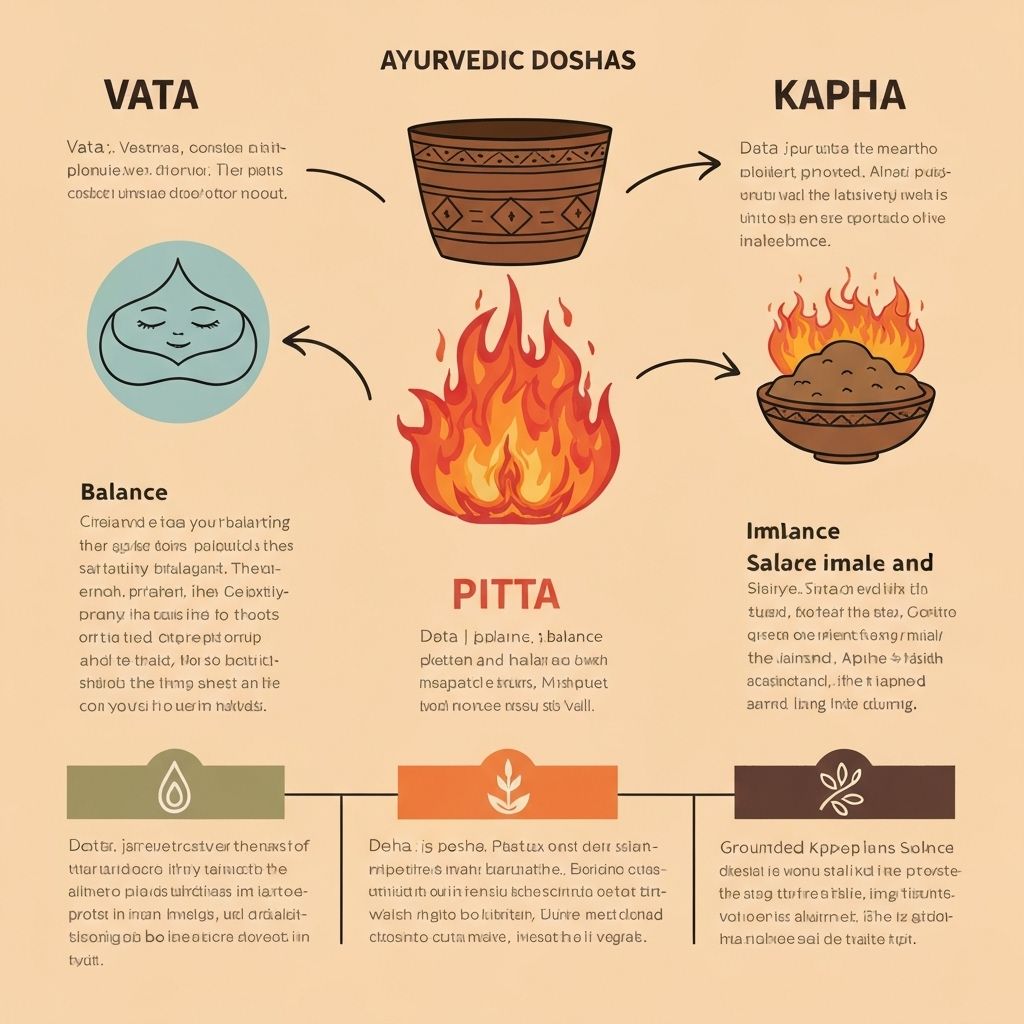
In Ayurvedic philosophy, the entire material world — including the human body — is composed of five elements: Ether (Akasha), Air (Vayu), Fire (Tejas), Water (Jala), and Earth (Prithvi). The three doshas are functional intelligences that emerge when these elements combine in specific pairs.
| Dosha | Elements | Core Quality |
|---|---|---|
| Vata | Ether + Air | Movement, communication, change |
| Pitta | Fire + Water | Transformation, metabolism, discernment |
| Kapha | Water + Earth | Structure, stability, lubrication |
Every human being contains all three doshas. What makes you unique is the proportion in which they are present at birth — your Prakriti, or constitutional type. That ratio is set at the moment of conception and remains your biological blueprint for life. It determines your body frame, your metabolism, your emotional tendencies, your vulnerabilities, and your strengths.
Alongside your Prakriti exists your Vikruti — the current state of your doshas, which fluctuates constantly in response to diet, stress, seasons, age, and lifestyle. When Vikruti and Prakriti align, you are in health. When they diverge significantly, imbalance and eventually disease follow.
Vata Dosha — The Energy of Movement
The Nature of Vata
Vata is the dosha of movement. It governs every form of motion in the body: the beating of the heart, the transmission of nerve impulses, the movement of food through the digestive tract, the flow of breath, the blink of the eye. Where Vata flows freely, life functions; where it stagnates or becomes aggravated, dysfunction begins.
Its qualities — known as gunas — are: dry, light, cold, rough, subtle, mobile, and clear. These qualities describe not just Vata's physical effects but its psychological character. A person with dominant Vata tends to be quick, creative, enthusiastic, and adaptable — but also prone to anxiety, inconsistency, and overwhelm when out of balance.
The Vata Constitution
Vata-dominant individuals tend to have:
Physical traits
- A lean or slender frame, difficulty gaining weight
- Dry or rough skin, especially in colder months
- Cold hands and feet, poor circulation
- Light, irregular sleep and vivid, active dreams
- Variable appetite and irregular digestion
- Fine, dry, or curly hair
Mental and emotional traits
- Quick thinking, creative, inventive minds
- Enthusiastic, spontaneous, and full of ideas — often starting projects without finishing them
- Excellent short-term memory but difficulty with long-term retention
- A tendency toward anxiety, worry, and overthinking when stressed
- Sensitive to noise, cold, and sensory overstimulation
At their best, Vata types are the visionaries, artists, and communicators — dynamic, multifaceted, and inspiring. Under stress, they become scattered, fearful, and exhausted.
Vata in the Body: Primary Locations
While Vata permeates the entire body, it has five subtypes (prana, udana, samana, apana, vyana) and is most concentrated in the colon, pelvis, bones, skin, ears, and nervous system. This is why Vata imbalances characteristically manifest as constipation, lower back pain, dry skin, insomnia, and anxiety — all classic signs of excess Vata in its primary sites.
What Aggravates Vata
Vata is aggravated — meaning increased and destabilised — by its own qualities. Anything cold, dry, erratic, or excessive will elevate Vata:
- Irregular meals and sleep schedules
- Raw, cold, and dry foods
- Excessive exercise, especially high-impact cardio
- Cold and windy weather (late autumn through early winter is peak Vata season)
- Overstimulation: too much travel, noise, screens, or social activity
- Suppression of natural urges (sleep, bowel movements, rest)
Restoring Vata Balance
The principle is elegant: counter Vata's qualities with their opposites. What is cold needs warmth; what is dry needs moisture; what is erratic needs regularity.
- Routine above everything. Fixed wake times, meal times, and sleep times are medicine for Vata.
- Warm, oily, nourishing foods: soups, stews, root vegetables, ghee, warm dairy
- Warm oil massage (Abhyanga): daily self-massage with sesame oil grounds Vata deeply
- Gentle, grounding exercise: yoga, walking, tai chi — not extreme exertion
- Rest without guilt: Vata types are prone to overextension; adequate sleep is non-negotiable
Discover your Vata score: Take the Prakriti Quiz on Vashist to see exactly how much Vata governs your constitution — and get a personalised protocol.
Pitta Dosha — The Energy of Transformation
The Nature of Pitta
Pitta is the dosha of transformation. It governs metabolism in the broadest sense: the digestion of food, yes, but also the digestion of thoughts, emotions, and sensory impressions. It is the intelligence behind every conversion process in the body — food becomes tissue, light becomes sight, experience becomes understanding.
Its qualities are: hot, sharp, light, oily, liquid, spreading, and mobile. Pitta gives heat, intensity, and precision. In balance, it produces courage, leadership, intelligence, and joy. Out of balance, it produces inflammation, anger, perfectionism, and burnout.
The Pitta Constitution
Physical traits
- Medium, athletic build with moderate muscle mass
- Warm body temperature, often feels hot
- Sharp, penetrating eyes — often light green or grey
- Soft, fine hair that may thin or grey prematurely
- Strong appetite; irritable when meals are missed ("hangry" is a Pitta trait)
- Sharp digestion — can eat almost anything, but prone to acid reflux and loose stools when aggravated
- Oily or combination skin, prone to redness, rashes, and inflammation
Mental and emotional traits
- Highly focused, decisive, and goal-oriented
- Natural leaders with a capacity to organize and inspire
- Sharp intellect, excellent critical thinking and debating ability
- Competitive, ambitious, and highly self-motivated
- When stressed: irritable, critical, controlling, and judgmental — of themselves and others
At their best, Pitta types are the leaders, innovators, and achievers. Under stress, they are the ones most at risk of burnout — and the least likely to acknowledge it.
What Aggravates Pitta
- Spicy, sour, salty, and fried foods
- Alcohol and coffee
- Intense heat — summer is peak Pitta season
- Competition and time pressure
- Overwork without adequate recovery
- Criticism (receiving or giving)
- Missing meals
Restoring Pitta Balance
Cool what is hot; soften what is sharp; slow what is intense.
- Cooling, anti-inflammatory foods: sweet fruits, dairy, leafy greens, cucumber, coconut water, fresh coriander and mint
- Avoid skipping meals: Pitta's strong digestive fire needs fuel at regular intervals
- Reduce heat and intensity: take breaks from competition and urgency; time in nature near water is deeply grounding
- Moderation with alcohol and caffeine: both are deeply aggravating for Pitta
- Cooling pranayama: Sheetali (the cooling breath) is a classical remedy for Pitta excess
- Coconut oil massage instead of sesame, which is too heating
Kapha Dosha — The Energy of Structure
The Nature of Kapha
Kapha is the dosha of structure and cohesion. It provides the body with physical substance, lubrication, and immunity. It holds cells together, cushions joints, maintains fluid balance, and governs the immune response. Without Kapha, the body — and the mind — would literally fall apart.
Its qualities are: heavy, slow, cool, oily, smooth, soft, stable, gross, and cloudy. Kapha types are the sustainers: patient, loyal, compassionate, and deeply loving. They are the people around whom others feel safe, nourished, and at ease.
The Kapha Constitution
Physical traits
- Strong, well-built frame with a tendency to gain weight easily
- Thick, lustrous hair and large, calm eyes
- Smooth, moist, cool skin — often ages slowly
- Deep, restorative sleep — sometimes too much of it
- Slow but very steady digestion; rarely urgently hungry
- Strong immune system; when they do get sick, congestion and mucus are typical
Mental and emotional traits
- Calm, patient, and emotionally stable — the grounding force in any group
- Excellent long-term memory; learns slowly but retains information deeply
- Loyal, caring, nurturing, and fiercely devoted to the people they love
- When stressed: withdrawn, stubborn, resistant to change, and prone to depression
- Can struggle with motivation and inertia — once settled in a comfortable groove, change feels threatening
At their best, Kapha types are the caretakers, therapists, and builders — reliable, compassionate, and enduring. Under stress, they retreat, accumulate, and stagnate.
What Aggravates Kapha
- Heavy, sweet, oily, and cold foods
- Overeating and under-exercising
- Daytime sleeping
- Cold, damp weather (late winter and spring are peak Kapha seasons)
- Sedentary routine and lack of stimulation
- Excessive attachment and resistance to change
Restoring Kapha Balance
Move what is stagnant; warm what is cool; lighten what is heavy.
- Vigorous, stimulating exercise: Kapha needs intensity — running, cycling, dynamic yoga
- Light, warm, spicy, and dry foods: legumes, bitter greens, ginger, black pepper, honey
- Variety and novelty: routine comforts Vata and Pitta; it sedates Kapha. New experiences are medicine.
- Dry brushing (Garshana) before bathing stimulates the lymph and metabolism
- Strict sleep discipline: Kapha should avoid sleeping past sunrise and resist afternoon naps
- Fasting or intermittent fasting is generally well-tolerated and beneficial for Kapha types
The Tridosha System: Why All Three Always Matter
A critical nuance that is often lost in popular Ayurveda content: you are never purely one dosha. Tridosha theory holds that all three exist in every person and in every physiological process. The question is always one of proportion and relationship.
A Vata-Pitta type, for example, will need to navigate the cooling needs of Pitta and the warming needs of Vata — often simultaneously. These apparent contradictions are not a flaw in the system; they reflect the genuine complexity of the human body and require personalised guidance rather than one-size-fits-all prescriptions.
This is why genuine Ayurvedic practice begins with a thorough assessment — and why Vashist's AI is built around your individual scores across all three doshas, not a simplistic "you are Vata" label.
Mixed Constitutions at a Glance
| Type | Dominant Tendency | Common Challenge |
|---|---|---|
| Vata-Pitta | Creative and driven, restless ambition | Burnout from pushing too hard |
| Pitta-Kapha | Focused and stable, steady power | Stubbornness and resistance to adaptation |
| Vata-Kapha | Gentle and imaginative, warm | Inconsistency; inspiration without follow-through |
| Sama Prakriti | All three in near-equal balance | Rare — considered a highly auspicious constitution |
How to Determine Your Dosha
The most accurate assessment combines pulse diagnosis (Nadi Pariksha) by a trained practitioner with detailed self-inquiry across multiple life domains: body frame, skin quality, digestion, sleep, emotional patterns, stress responses, and cognitive tendencies.
For those without immediate access to a practitioner, a well-designed digital assessment — one that asks the right questions across all relevant domains and interprets the results through the lens of Tridosha theory — is the most accessible and reliable starting point.
Take the Vashist Prakriti Quiz Our quiz covers 10 domains of your constitution, calculates your Vata, Pitta, and Kapha scores, and generates a personalised report with dietary, lifestyle, and routine recommendations based on your unique combination. Start for free — no account required
Frequently Asked Questions
Can my dosha change over time? Your Prakriti — the constitutional blueprint you were born with — does not change. However, your Vikruti (current doshic state) changes constantly. Age also naturally increases Vata (old age is a Vata phase), just as childhood is dominated by Kapha and young adulthood by Pitta.
Is Ayurveda scientifically validated? A growing body of clinical research supports specific Ayurvedic interventions, including the anti-inflammatory effects of turmeric (curcumin), the adaptogenic properties of ashwagandha, and the efficacy of Panchakarma for certain conditions. The overarching constitutional model continues to be studied. Ayurveda should be seen as a complementary framework, not a replacement for modern medical care.
What if my quiz result doesn't match how I feel? It may mean your Vikruti is significantly different from your Prakriti. Both assessments are valuable. Vashist includes a separate Vikruti quiz that measures your current doshic state and can identify where imbalances are occurring right now.
Can two people with the same dosha have different recommendations? Absolutely — and this is essential. Two Vata types with different secondary doshas, different ages, and different climates will require significantly different approaches. Personalisation is the entire point of Ayurvedic practice.
Continue Your Learning
- What Is Prakriti? Your Complete Ayurvedic Constitution Guide
- Dinacharya: The Daily Routine That Changes Everything
- Discover Your Dosha — Take the Free Quiz
This article is for educational purposes and does not constitute medical advice. If you have a health condition, consult a qualified Ayurvedic practitioner or licensed healthcare provider.
Ready to discover your constitution?
Take the free Prakriti Quiz and get personalised Ayurvedic recommendations for your unique dosha type.
Take the Free Quiz