Modern medicine is extraordinary at identifying what is wrong. Ayurveda begins with a different question entirely: Who are you when you are well?
That question has a precise answer. Ayurveda calls it your Prakriti — and understanding yours may be the single most useful thing you can do for your long-term health.
The Definition of Prakriti
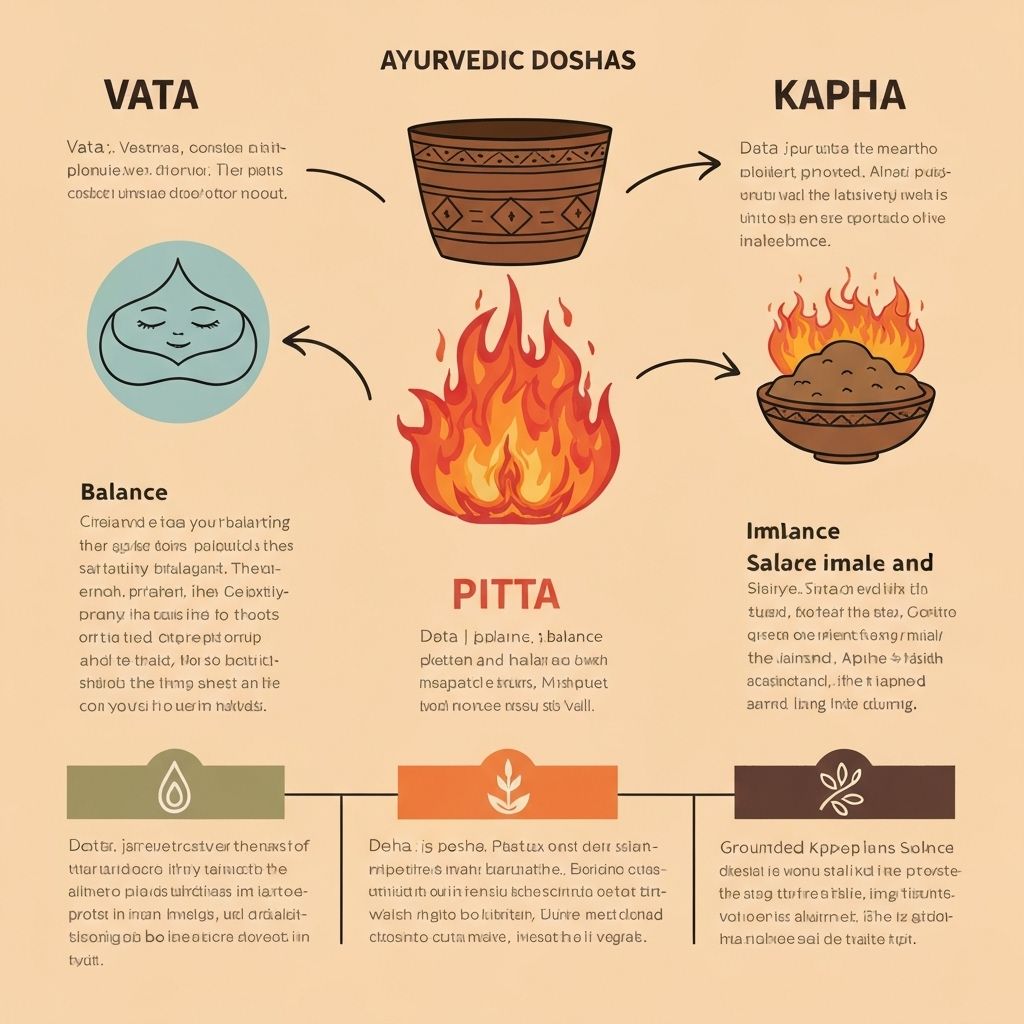
The word Prakriti (Sanskrit: प्रकृति) translates most accurately as "original nature" or "natural form." In Ayurvedic medicine, it refers to the unique psychophysiological constitution you were born with — the specific ratio of the three doshas (Vata, Pitta, and Kapha) that was established at the moment of your conception.
This ratio is determined by multiple factors at the time of conception: the Prakriti of both parents, the season, the health and diet of the mother during pregnancy, and, according to classical texts, even the cosmic conditions at the time of birth. Once set, your Prakriti does not change. It is your biological fingerprint.
Think of Prakriti as your genetic and constitutional baseline — the state in which your body, mind, and metabolism are functioning at their optimal level. It defines your natural tendencies across every domain of physiology and psychology: how you digest food, how you sleep, how you respond to stress, how you learn, how your skin and hair behave, and what illnesses you are most vulnerable to.
Prakriti vs Vikruti: The Most Important Distinction
No concept is more central to understanding Ayurvedic diagnosis than the difference between Prakriti and Vikruti.
Prakriti = your constitutional blueprint (fixed at birth, your reference point for optimal health)
Vikruti = your current doshic state (dynamic, changes constantly in response to diet, lifestyle, stress, season, and age)
When Vikruti closely matches Prakriti, you are in health. When Vikruti diverges significantly from Prakriti, you are moving toward imbalance — and, if left unaddressed, toward disease.
A Concrete Example
Imagine a person with a predominantly Pitta Prakriti. At their constitutional baseline, they run warm, have sharp digestion, and are mentally focused and ambitious. This is their healthy normal. Now imagine they spend six months working excessive hours, eating spicy food under deadline pressure, sleeping poorly, and competing aggressively at work. Their Vikruti is now heavily Pitta-aggravated. They develop acid reflux, skin rashes, hair thinning, and episodes of intense irritability. These symptoms are not random — they are the predictable consequences of a Pitta constitution pushed far out of its natural balance.
The prescription is not the same for everyone with those symptoms. A Kapha-dominant person with the same acid reflux may need a completely different intervention. This is why Prakriti assessment comes first.
The Seven Constitutional Types
Because all three doshas are present in every person, Prakriti types are defined by which dosha or combination of doshas predominates.
| Prakriti Type | Characteristics |
|---|---|
| Vata | Lean, creative, quick, sensitive, prone to dryness and anxiety |
| Pitta | Medium build, sharp, driven, warm, prone to inflammation and frustration |
| Kapha | Sturdy, calm, steady, nurturing, prone to congestion and inertia |
| Vata-Pitta | Restless ambition; driven and creative; prone to exhaustion and sharp anxiety |
| Pitta-Kapha | Powerful and steady; determined and warm; prone to stubbornness |
| Vata-Kapha | Gentle and imaginative; creative and loyal; prone to inconsistency |
| Sama (Tridoshic) | Rare balanced constitution; high resilience but requires careful attention to all three doshas simultaneously |
The large majority of people are dual-doshic — they have one clearly dominant dosha and a strong secondary. True single-dosha constitutions, while they exist, are less common. Sama Prakriti — all three doshas in perfect equilibrium — is considered exceptionally auspicious in classical texts and is genuinely rare.
Why Prakriti Determines Everything
Once you understand your Prakriti, the framework applies to every dimension of how you live. This is not a vague wellness concept — it is a systematic, predictive model.
Diet
Different Prakritis require different foods, eating patterns, and cooking methods. A Vata type needs warm, oily, heavy, and stabilising foods — they do poorly on raw salads and intermittent fasting. A Kapha type needs the opposite: light, dry, warm, and stimulating foods with longer gaps between meals. Giving one person's dietary prescription to the other will produce the opposite of the intended result.
Sleep
Vata types tend toward light, irregular sleep and are prone to insomnia and overactive dreaming. Kapha types sleep deeply and heavily, often needing firm structure to avoid oversleeping. Pitta types sleep moderately but may wake between 2 and 4 AM (the Pitta period of the night) with racing thoughts. Each requires a different intervention.
Exercise
High-intensity training is genuinely grounding for Kapha types, who need stimulation and metabolic challenge. For Vata types, the same training regime is deeply destabilising — it aggravates their already mobile, dry nature and accelerates burnout. Pitta types need vigorous but non-competitive exercise; they excel at structured practice but must avoid making fitness another arena for performance.
Seasonal Adaptation
Each season predominantly affects one dosha. Late winter and spring accumulate Kapha (cold, wet, heavy). Summer and early autumn aggravate Pitta (hot, intense). Late autumn and early winter destabilise Vata (cold, dry, windy). Your Prakriti determines which seasons are most critical for you to manage carefully.
Emotional Patterns and Stress Response
Vata types under stress become anxious, scattered, and fearful. Pitta types become angry, critical, and controlling. Kapha types become withdrawn, stubborn, and depressed. The same external stressor will produce categorically different psychological responses depending on Prakriti — which means that effective mental health support must be tailored accordingly.
Pharmacology and Herbal Medicine
Even Ayurvedic herbs and formulas are doshically specific. Ashwagandha, for example, is excellent for Vata (it is warming, stabilising, and deeply nourishing) but may be too heating for a severely aggravated Pitta type. Triphala, while generally beneficial, has different dosing and preparation guidelines depending on constitution. This is why self-prescribing herbal supplements without knowing your Prakriti produces inconsistent results.
How Prakriti Is Traditionally Assessed
In classical Ayurvedic practice, Prakriti is determined through a comprehensive examination called Ashtavidha Pariksha — an eight-fold assessment that includes:
- Nadi Pariksha — Pulse diagnosis, considered the gold standard
- Mala Pariksha — Examination of stool
- Mutra Pariksha — Urinalysis
- Jihva Pariksha — Tongue examination
- Shabda Pariksha — Voice and sound quality
- Sparsha Pariksha — Touch and skin assessment
- Drik Pariksha — Eye examination
- Aakruti Pariksha — Overall physical appearance and frame
Determining Your Prakriti Through Self-Assessment
For those without immediate access to a qualified Ayurvedic practitioner, a well-designed self-assessment questionnaire is the most practical entry point. The key is that the assessment must cover constitutional tendencies across your whole life, not just how you feel right now.
When completing a Prakriti assessment, answer based on what has been consistently true throughout your life — not how you feel this week, this month, or even this year.
Domains a valid Prakriti assessment should cover:
- Body frame and weight: natural build, weight gain/loss tendencies, bone structure
- Skin and hair quality: baseline texture, moisture, temperature, hair thickness
- Digestion and elimination: appetite, digestion speed, bowel habits
- Sleep: natural depth, duration, dreaming patterns
- Energy and activity: natural pace, stamina, recovery speed
- Cognitive style: learning speed, memory type, mental endurance
- Emotional baseline: dominant emotional tone, stress response, social temperament
- Speech and communication: natural speed, volume, pattern
Take the Vashist Prakriti Assessment Vashist's quiz covers all relevant constitutional domains and generates a full Vata-Pitta-Kapha score breakdown with personalised recommendations across diet, routine, and lifestyle. Begin your assessment — free
What to Do With Your Prakriti Results
Knowing your Prakriti is only valuable if it changes something. Here is a practical framework:
Step 1: Accept your baseline
Your Prakriti is not a limitation — it is accurate information. Resist the temptation to wish you were a different type. Work with your nature.
Step 2: Identify your current Vikruti
Compare your Prakriti results with your Vikruti assessment. The difference between the two tells you where to focus your attention.
Step 3: Apply the first principle — diet
Start with food. Your Prakriti-specific dietary guidelines are the foundational intervention. Changes in diet produce noticeable shifts in energy, digestion, and mood within days to weeks.
Step 4: Build your Dinacharya
A daily routine calibrated to your Prakriti is the most powerful long-term tool in Ayurveda. Explore the Vashist Dinacharya Builder
Step 5: Reassess seasonally
Revisit your Vikruti every season. Your current-state scores will shift, and your protocol should adapt accordingly.
Frequently Asked Questions
Can I change my Prakriti through lifestyle or spiritual practice? No. Prakriti is fixed at conception. What you can influence — entirely and profoundly — is your Vikruti. The goal is not to change who you are but to maintain the doshic balance that expresses your constitution at its best.
My parents are opposite constitutional types. How does that affect my Prakriti? Both parents contribute, but not in a simple averaging fashion. The classical texts describe multiple contributing factors at conception. In practice, the result is a unique constitutional combination that may favour one parent's dominant dosha, blend both, or produce something distinct from either.
I got different results from different Prakriti tests. Which should I trust? The quality of doshic assessments varies enormously. Many online quizzes are superficial and not calibrated to distinguish Prakriti from Vikruti. A result is only as reliable as the depth and rigour of the assessment behind it.
Does Prakriti relate to Ayurvedic blood type theories? No. There is no classical Ayurvedic text that correlates Prakriti with blood type. This is a popular but unfounded modern conflation.
Continue Your Learning
- The Complete Guide to Vata, Pitta, and Kapha Doshas
- Dinacharya: The Daily Routine Built Around Your Constitution
- Discover Your Dosha — Take the Free Quiz
This article is for educational purposes and does not constitute medical advice. Consult a qualified Ayurvedic practitioner for personalised clinical guidance.
Ready to discover your constitution?
Take the free Prakriti Quiz and get personalised Ayurvedic recommendations for your unique dosha type.
Take the Free Quiz